Samaritan’s Fellowship Foundation Pakistan works with marginalized and minority communities to defend their rights, strengthen their voice, and create opportunities for lasting self-reliance.
Our work connects three pillars: Freedom, Rights & Empowerment; Economic Opportunity; and Peace & Fellowship.
We speak for the freedom of people from social differences, injustice, modern slavery, extremism, religious intolerance, persecution, and poverty.
Quetta 2024: Blasphemy Suspect Killed in Police Custody
September 12, 2024
Quetta 2024: Blasphemy Suspect Killed in Police Custody
Quetta, Balochistan | 12 September 2024
Police had already saved him from a mob.
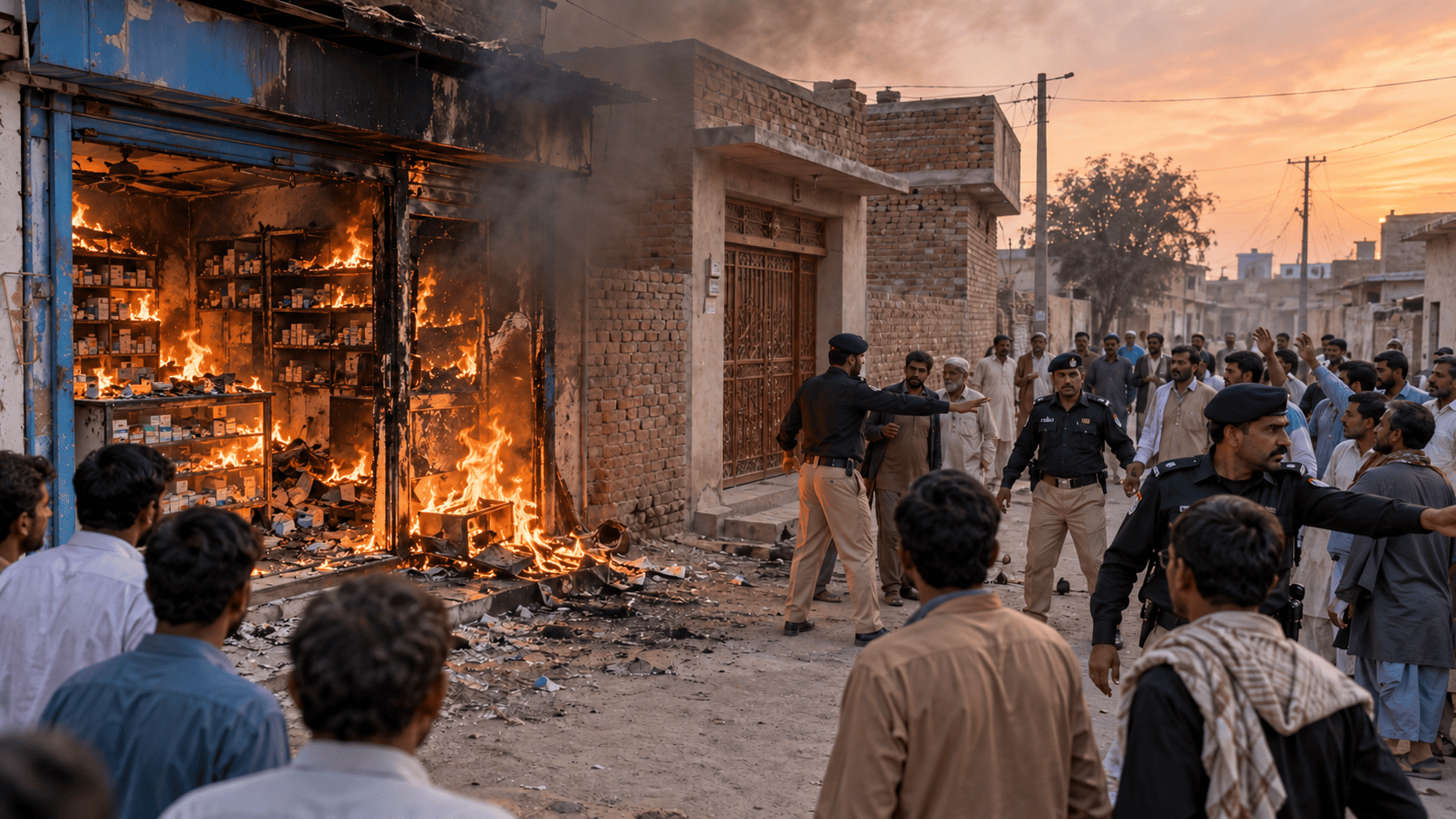
He had been moved from one station to a more secure police facility because hundreds of people were demanding that authorities hand him over.
The purpose of that transfer was protection.
But the danger came from inside the institution itself.
On 12 September 2024, a police officer gained access to the detained man by pretending to be his relative.
He then shot him dead inside police custody.
Reuters later identified the victim as 52-year-old Abdul Ali, also known as Sakhi Lala, and the accused police officer as Saayd Mohammad Sarhadi.
The Quetta case was different from Warburton and Madyan.
There, mobs broke into police stations and killed detainees.
In Quetta, police successfully kept the mob outside.
Then a police officer allegedly carried out the killing himself.
That difference makes this one of the most disturbing cases in this archive.
Who Was the Victim?
Later Reuters reporting identified the victim as Abdul Ali, aged 52, also known locally as Sakhi Lala.
Some early Associated Press reports identified the slain man as Syed Khan.
Because contemporary sources used different names in the first days after the killing, SFFP should acknowledge the discrepancy rather than silently choosing one account.
The strongest later reporting from Reuters, which included statements from the victim’s son and tribal elders, identifies him as:
Abdul Ali, also known as Sakhi Lala.
He was Muslim.
Once again, this case demonstrates that blasphemy-related extrajudicial violence is not limited to Pakistan’s religious minorities.
The Allegation Followed an Argument
According to a police investigator cited by Reuters, the allegation arose from an argument involving politics and the Prophet Muhammad.
Ali was subsequently accused of blasphemy.
That accusation had not been tested before a court.
He had not been convicted.
Authorities therefore had a straightforward responsibility:
investigate,
protect him,
and allow the judicial process to determine the allegation.
A Large Crowd Demanded His Custody
Ali was initially detained at a police facility in Quetta.
Hundreds of people then gathered outside and demanded that police hand him over so that he could be killed publicly, according to Reuters.
The threat was serious enough that police decided the original station was no longer safe.
That was the correct assessment.
Police Moved Him to a More Secure Station
Authorities transferred Ali to a heavily fortified police station because of the mob threat.
This is important.
Police had learned the lesson visible in earlier cases.
A vulnerable detainee surrounded by an angry crowd should not remain in an exposed station.
Ali was moved specifically because authorities wanted to prevent another police-station lynching.
For a moment, the protective system appeared to be working.
The Mob Did Not Get Him
Unlike Muhammad Waris in Nankana Sahib or Muhammad Ismail in Madyan, Ali was not taken by the crowd.
The secure facility kept the mob away.
That should have meant he survived long enough to appear before a court.
Instead, the danger changed form.
A Police Officer Pretended to Be His Relative
Reuters reported that police officer Saayd Mohammad Sarhadi managed to enter the facility by pretending to be a relative of Abdul Ali.
That raises serious questions about security procedure.
A high-risk detainee had been moved precisely because threats against his life were known.
Anyone requesting access should therefore have been subject to strict verification.
Yet the officer reached him.
12 September 2024
Once inside, the officer allegedly opened fire on Ali.
Ali died in police custody.
Quetta Senior Superintendent of Police Muhammad Baloch confirmed that the officer accused of the killing was arrested.
The allegation against Ali had still not been judicially determined.
A person whose life had been protected from an external mob was now dead inside the institution responsible for keeping him safe.
This Was Not a Mob Lynching
That distinction matters.
The violence surrounding the case began with a crowd.
But the fatal act itself was allegedly committed by an individual police officer.
The correct description is therefore:
a custodial killing of a blasphemy suspect by a police officer.
That makes the institutional issue even more serious.
Police are not simply another group in society.
They carry state authority.
Police Have a Higher Duty Toward People in Custody
When police arrest a person, the state assumes control over that person’s movements.
The detainee cannot:
leave,
choose another place to stay,
hire private protection,
or escape danger independently.
That creates a heightened duty of care.
Ali was literally moved because authorities knew his life was at risk.
The state therefore knew:
the threat was real,
the threat was immediate,
and extraordinary protection was necessary.
The Officer Was Arrested
Authorities arrested the officer accused of the shooting shortly afterward.
This is important for a balanced record.
The killing was not officially sanctioned.
Police leadership did not defend it as lawful.
The accused officer was taken into custody.
That response should be documented.
Then the Case Took an Unexpected Turn
One week later, Abdul Ali’s family publicly announced that they had forgiven the police officer accused of killing him.
Reuters reported that Ali’s son, Muhammad Usman, said the family would not pursue the case and had forgiven the officer “in the name of God.”
Tribal elders appeared with the family at the announcement.
This created a highly unusual legal and social situation.
The Tribe Also Distanced Itself From Ali
Reuters reported that tribal elder Faizullah Noorzai said the tribe would disown Abdul Ali because of the blasphemy allegation.
This illustrates the extraordinary social pressure surrounding such cases.
Ali was dead.
There had been no trial.
Yet his own tribe publicly distanced itself from him.
The stigma of the allegation survived even after his death.
Forgiveness Does Not Decide Whether the Killing Was Lawful
A victim’s family may choose forgiveness.
That is their personal decision.
But the legal question is different.
The state must still determine whether a public official committed a criminal offence while exercising police authority.
Reuters reported that a court would consider the family’s pardon request and determine whether proceedings should continue.
That separation matters.
Private forgiveness and public accountability are not necessarily the same thing.
Why Custodial Killings Are Different
If two private individuals have a personal dispute, the victim’s family may have a major role in determining how reconciliation proceeds under applicable law.
But when a police officer allegedly kills someone inside a police station, there is also a broader public interest.
The issue becomes:
Can citizens trust police custody?
Can high-risk detainees be protected?
Are officers accountable for abusing state authority?
Those questions affect everyone.
The Allegation Against Ali Was Never Tried
Ali died before a court could decide the blasphemy allegation.
Our article should therefore never describe him as someone who committed blasphemy.
The accurate wording is:
Abdul Ali was accused of blasphemy.
That distinction is not cosmetic.
It is the foundation of due process.
The State Has Never Executed Anyone for Blasphemy
Reuters noted that Pakistan’s law provides severe penalties for blasphemy, including death in certain circumstances, but that the state has not carried out an execution for the offence.
Yet people accused of blasphemy have repeatedly been killed before trials or appeals conclude.
This creates a dangerous contradiction:
The formal legal system has procedures.
The informal system of vigilantism bypasses them entirely.
This Case Came After Madyan
Only months earlier, Muhammad Ismail had been taken from police custody and killed by a mob in Madyan.
Authorities in Quetta appeared to respond differently.
They moved Ali to a secure facility specifically because of the mob threat.
But the system still failed.
That shows that secure walls alone are not enough.
The people inside those walls also have to respect the law.
This Case Came Just Before Dr Shahnawaz
Only about a week later, another man accused of blasphemy—Dr Shahnawaz Kunbhar in Sindh—was killed in circumstances that an official inquiry later described as a staged police encounter.
Taken together, the Quetta and Dr Shahnawaz cases raised a much more serious concern.
The danger was no longer only:
mob versus police.
It was potentially:
blasphemy suspect versus elements within law enforcement itself.
That is an alarming escalation.
Police Must Be Neutral
Police officers do not need to personally approve of a suspect’s alleged conduct.
Their job is not theological judgment.
Their job is:
to protect life,
preserve evidence,
conduct lawful investigation,
and bring accused persons before courts.
Professional policing depends on that separation.
Personal Religious Belief Cannot Replace Official Duty
Every police officer has personal beliefs.
But once wearing the uniform, state authority must be exercised according to law.
An officer cannot decide:
the accusation is offensive,
therefore the accused deserves death.
If police begin administering private punishment, the distinction between state justice and mob justice disappears.
High-Risk Detainees Need Special Access Controls
The detail that the officer allegedly pretended to be a relative is particularly important.
Once a person is identified as facing a credible lynching threat, police should adopt strict controls regarding:
visitors,
staff access,
weapon access,
surveillance,
and detainee movement.
A secure police station is only secure if the people entering it are screened properly.
Police Officers Themselves May Need Screening
Security planning often assumes the threat is outside the station.
Quetta shows why that assumption is incomplete.
In especially sensitive cases, authorities may also need to consider:
which officers are assigned,
whether anyone has expressed threats,
who has access to the detainee,
and whether armed personnel should enter custodial areas.
This is uncomfortable.
But the case demonstrates why it may be necessary.
The Killing Was Reportedly Celebrated by Some
Reuters reported that the accused officer’s father received visitors who came to pay respects after the killing.
This social glorification is important.
Accountability becomes much harder when a suspected extrajudicial killing is treated as heroic.
The problem is then larger than one officer.
It becomes a cultural challenge to the rule of law.
Glorifying Extrajudicial Killing Creates the Next Case
When someone who kills an accused person is celebrated, the message to others can become:
you may be admired,
not punished.
That can encourage repetition.
Strong institutional condemnation is therefore necessary not only for justice in the current case.
It is necessary for prevention.
Ali Was Muslim
As with Mashal Khan, Muhammad Waris and Muhammad Ismail, Abdul Ali belonged to Pakistan’s Muslim majority.
Again, the archive should make this visible.
Blasphemy-related extrajudicial violence disproportionately creates fear among minority communities, but it can also threaten Muslims.
The broader principle is:
No religious identity guarantees safety once accusation replaces due process.
No person should be killed before the law determines guilt.
That applies to Christians.
Muslims.
Hindus.
Ahmadis.
Sikhs.
Foreign nationals.
And anyone else.
Protecting the Accused Does Not Mean Supporting Blasphemy
This distinction should remain explicit.
A person can believe deeply in respect for the Prophet Muhammad and still oppose extrajudicial killing.
A person can support strict religious laws and still insist that only courts apply them.
Due process is not disrespect for religion.
It is a protection against false accusations, personal revenge and uncontrolled violence.
Strong Institutions Protect Religion and Citizens
When institutions function properly:
false accusations can be discovered,
real offences can be prosecuted lawfully,
innocent people can be protected,
and religious disputes do not become street violence.
Weak institutions harm everyone.
They undermine:
public trust,
religious harmony,
policing,
and justice.
What Should We Learn From Quetta?
Blasphemy suspects facing mob threats need secure transfer.
Secure facilities need strict visitor verification.
High-risk detainees may require restricted staff access.
Police officers must be trained that personal religious beliefs cannot override custodial duty.
Killings by state personnel require independent investigation.
Social glorification of extrajudicial killings should be publicly rejected.
And a family’s decision to forgive should not prevent authorities from examining failures affecting the wider public interest.
Most importantly:
A person rescued from a mob must also be safe from the people assigned to guard him.
Custody Must Mean Safety
That is the single strongest lesson from Quetta.
The state successfully kept hundreds of angry people away from Abdul Ali.
Then the system failed from inside.
Protection cannot mean:
keeping the mob outside.
It must mean:
keeping the detainee alive until the court process is complete.
Help Us Advance Freedom, Dignity and Opportunity
Samaritan’s Fellowship Foundation builds integrated, community-led ecosystems that empower marginalized communities through human rights, healthcare, education, clean water, sustainable livelihoods and local leadership.
We believe police custody must protect every person—especially when public anger makes that protection difficult.
If you believe allegations should be decided through evidence and courts rather than bullets or mobs:
Together, we can strengthen communities where institutions protect life, justice remains impartial, and dignity belongs to everyone.
Empowerment Beyond Aid — Advancing Freedom and Rights.
Editorial Note
Samaritan’s Fellowship Foundation documents publicly reported human-rights cases for education, historical record and awareness.
Later Reuters reporting identified the victim as 52-year-old Abdul Ali, also known as Sakhi Lala, while some early Associated Press reporting identified the slain man as Syed Khan. This article uses Reuters’ later identification because it included direct reporting from the victim’s son and tribal elders, while acknowledging that initial reports differed.
Abdul Ali was accused of blasphemy and transferred to a heavily fortified police facility after hundreds of people reportedly demanded that he be handed over for public killing. He died before any judicial determination of the allegation.
Police arrested officer Saayd Mohammad Sarhadi after the shooting. Ali’s family later announced that they had forgiven the accused officer and would not pursue the case, although Reuters reported that a court would determine the legal effect of the family’s request.
SFFP does not attribute the alleged actions of one police officer to Pakistan’s police generally, Islam, Muslims generally, Balochistan or the people of Pakistan.
We support lawful investigation, professional policing, custodial safety, due process and equal human dignity for every accused person.
References
1. Reuters — Pakistani Police Officer Kills Man Accused of Blasphemy, 12 September 2024
Contemporary report confirming that a police officer allegedly entered the secure facility by pretending to be a relative and shot the detained blasphemy suspect.
2. Reuters — Blasphemy Suspect’s Family Forgives Police Officer Accused of Killing Him, 19 September 2024
Identifies the victim as Abdul Ali, also known as Sakhi Lala; names the accused officer; reports the family’s forgiveness; and describes the mob threat that led police to transfer Ali to a fortified facility.
3. Associated Press — Pakistani Policeman Shoots Blasphemy Suspect in Custody, 12 September 2024
Early international reporting on the custodial killing. AP initially identified the victim as Syed Khan, illustrating the naming discrepancy in initial coverage.
8. Reuters — Inquiry Finds Doctor Accused of Blasphemy Killed in Fake Police Shootout, 26 September 2024
Provides important context because the subsequent Dr Shahnawaz case became the second blasphemy-related killing involving police within approximately one week.