Samaritan’s Fellowship Foundation Pakistan works with marginalized and minority communities to defend their rights, strengthen their voice, and create opportunities for lasting self-reliance.
Our work connects three pillars: Freedom, Rights & Empowerment; Economic Opportunity; and Peace & Fellowship.
We speak for the freedom of people from social differences, injustice, modern slavery, extremism, religious intolerance, persecution, and poverty.
Dr Shahnawaz Kunbhar: Killed in a Staged Police Encounter
September 19, 2024
Dr Shahnawaz Kunbhar: Killed in a Staged Police Encounter
Umerkot / Mirpurkhas, Sindh | 19 September 2024
He was a doctor.
A Muslim.
A government medical officer.
Then came accusations that blasphemous material had appeared on a social-media account associated with him.
Protests erupted.
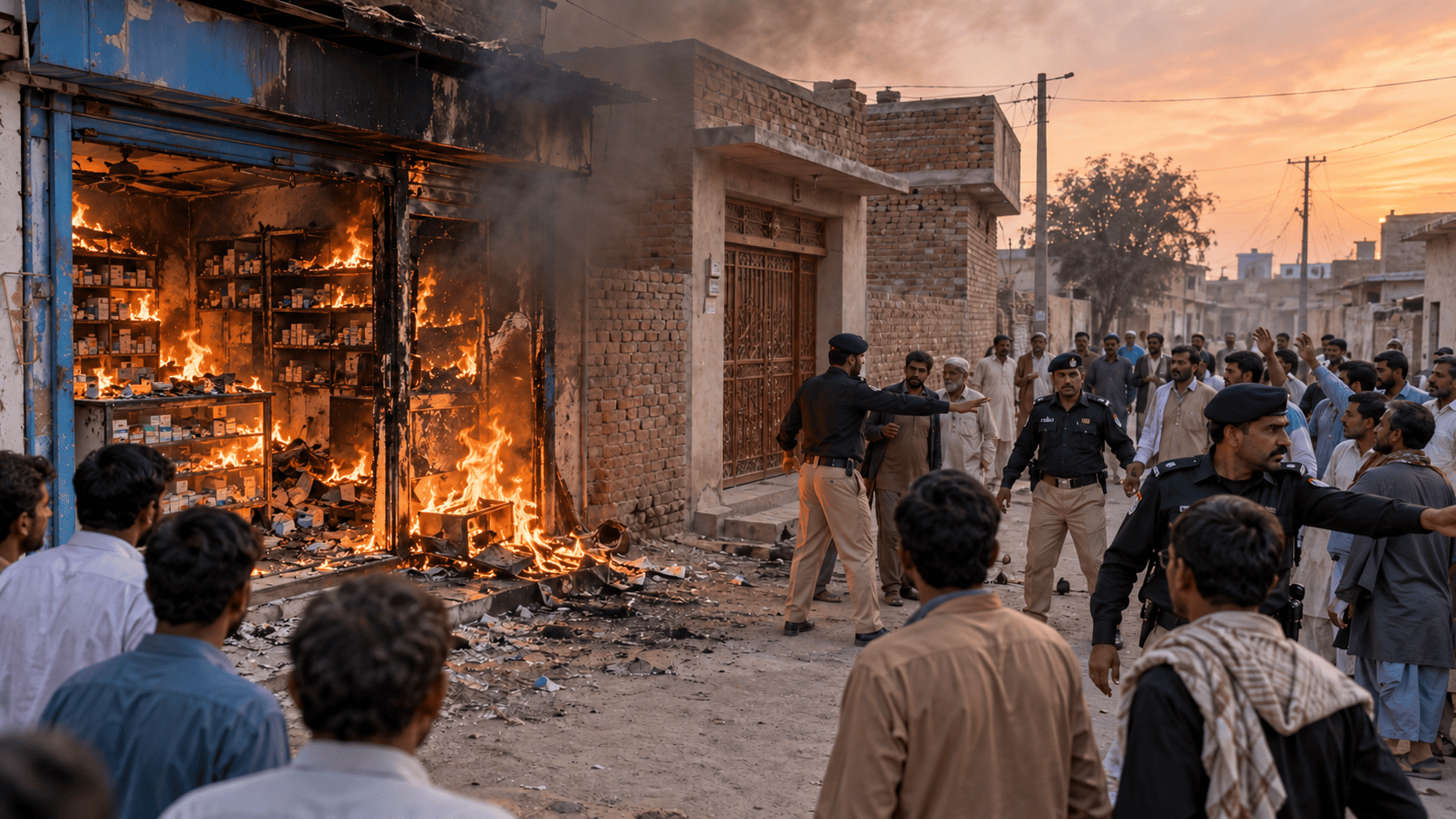
His clinic was attacked.
He went into hiding.
His family said he surrendered after receiving assurances that he would be allowed to prove his innocence.
Hours later, police announced that he had been killed in an “encounter.”
But the official story did not survive scrutiny.
A Sindh government inquiry later concluded that Dr Shahnawaz Kunbhar had not died in a genuine shootout at all. He had been killed in a staged police encounter while effectively in police custody.
His body was then taken by a mob and burned.
The case triggered protests across Sindh, criminal proceedings against senior police officers and religious figures, and an ongoing legal battle that was still active in 2026.
This is one of the most serious cases in our archive because the alleged failure was not only:
mob versus accused.
It was also:
state power versus a person entitled to protection and trial.
Who Was Dr Shahnawaz Kunbhar?
Dr Shahnawaz Kunbhar was a medical practitioner from Umerkot District in Sindh.
He worked at a government hospital and was described in later reporting as a qualified doctor who also participated in medical service within his community.
He was Muslim.
That matters.
Like Mashal Khan, Muhammad Waris, Muhammad Ismail and Abdul Ali, Dr Shahnawaz demonstrates that blasphemy-related extrajudicial violence is not restricted to Pakistan’s religious minorities.
The underlying danger is broader:
once accusation replaces evidence, anyone can become vulnerable.
The Allegations Began on Social Media
In mid-September 2024, Dr Shahnawaz was accused of posting blasphemous material on social media.
Reuters reported that the accusations concerned alleged insults toward the Prophet Muhammad.
A blasphemy case was subsequently registered against him.
Public anger escalated quickly.
Demonstrations took place in Umerkot.
His clinic was reportedly attacked and set on fire during the unrest.
At that stage, however, the key point remained unchanged:
The accusation had not been proven in court.
Dr Shahnawaz Denied the Allegation
Before his death, Dr Shahnawaz publicly denied responsibility for the allegedly blasphemous posts.
His family maintained that his social-media account had been compromised or misused.
Associated Press reported that family members said posts continued appearing even after he was already in police custody, which they believed supported the claim that he had not been controlling the account.
That claim needed investigation.
Police could examine:
account login history,
devices,
IP addresses,
SIM records,
platform data,
and forensic evidence.
Those tools exist precisely because digital accusations can be manipulated.
A Social-Media Account Is Not Automatically a Person
The case raises an important modern evidentiary issue.
If offensive content appears under someone’s name, investigators still need to establish:
Who controlled the account?
Was it hacked?
Was the password shared?
Was the material edited?
Which device posted it?
Where was that device located?
Was the accused person actually using it?
A social-media profile is evidence.
It is not automatically proof of authorship.
Protests Escalated in Umerkot
The accusations triggered intense public anger.
Protesters gathered in Umerkot demanding action against Dr Shahnawaz.
Reporting documented attacks on police property and the doctor’s clinic amid the unrest.
He went into hiding.
The situation had become dangerous enough that ordinary investigation was no longer simple.
The accused now also needed physical protection.
His Family Encouraged Him to Surrender
According to Associated Press, Dr Shahnawaz’s family said police assured them that he would be protected and given an opportunity to defend himself.
His mother later said the family urged him to cooperate because they believed police would keep him safe.
That decision should have moved the case back toward lawful process.
A suspect surrenders.
Police investigate.
A court decides.
Instead, the family soon learned that he was dead.
He Was Arrested in Karachi
The later government inquiry established that Dr Shahnawaz was traced and arrested in Karachi before being transferred toward Mirpurkhas.
That finding became critical.
It contradicted the initial public impression that police had simply encountered an unidentified armed suspect by chance.
Authorities already knew who he was.
He was in their control.
Police Initially Claimed There Had Been a Shootout
The original police account was dramatically different.
Officers claimed they had attempted to stop two men travelling on a motorcycle in Mirpurkhas.
According to that version, the men opened fire.
Police returned fire.
One man escaped.
The other was killed.
Police initially claimed they only realized afterward that the dead man was Dr Shahnawaz Kunbhar.
If that account had been true, his death would have been the result of an armed encounter.
But serious questions emerged almost immediately.
The Family Said He Had Already Surrendered
Dr Shahnawaz’s relatives rejected the police version.
They said he had been arrested.
He had not randomly encountered police on a motorcycle.
He had surrendered after assurances of protection.
His mother told AP:
she wanted justice for her son because he had been killed while in police custody.
That contradiction demanded an independent investigation.
Police Officers Were Publicly Celebrated
After Dr Shahnawaz’s death, photographs and video emerged showing police officers involved in the case receiving praise and flower garlands from some members of the public.
Reuters reported that the killing was initially celebrated by some religious supporters before the official inquiry reversed the narrative.
That reaction is significant.
When suspected extrajudicial killing is celebrated publicly, it can create dangerous incentives.
The message becomes:
killing the accused may bring admiration rather than accountability.
His Body Was Returned to the Family
After Dr Shahnawaz was killed, his body was released for burial.
His family attempted to take him home.
But the violence was not over.
A crowd intercepted the body.
A Mob Burned His Body
Associated Press reported that Dr Shahnawaz’s father said the mob took his son’s body and burned it in front of him.
The image is disturbing enough without graphic detail.
For our archive, the human-rights fact is sufficient:
Even after he had already been killed, the family was denied a peaceful burial.
Burning the Body Added Another Layer of Violence
Human dignity does not end at death.
Families have a right to mourn.
Communities have burial traditions.
Parents have the right to bury their children without facing a mob.
The burning of Dr Shahnawaz’s body transformed an alleged custodial killing into a wider act of public humiliation and intimidation.
The Family Was Terrified
Associated Press reported that Dr Shahnawaz’s widow said the family was too frightened even to send their children to school after the incident.
This is how one accusation becomes a family-wide punishment.
The doctor was dead.
But the consequences continued for:
his wife,
children,
parents,
and relatives.
The Sindh Government Ordered an Inquiry
Public criticism grew rapidly.
Human-rights activists, civil-society groups and political figures demanded an investigation.
Sindh Home Minister Ziaul Hassan Lanjar ordered an inquiry into the circumstances of the killing.
That decision became a turning point.
The official version of events was now being examined by the government itself.
The Inquiry Rejected the Police Encounter Story
On 26 September 2024, Sindh authorities publicly announced the findings.
The government inquiry concluded that there had been no genuine shootout.
Dr Shahnawaz had been killed in a staged or fake police encounter.
Associated Press reported that Sindh’s provincial authorities acknowledged that police had orchestrated the killing and then lied about what had happened.
That conclusion is one of the strongest official findings in any story we have documented.
The Government Itself Said Police Were Responsible
This point deserves emphasis.
The allegation of extrajudicial killing did not remain only an accusation from activists or the family.
The Sindh government’s own inquiry found police responsibility.
For SFFP, that makes the case safer to document firmly.
We can say:
The official inquiry concluded that Dr Shahnawaz Kunbhar was killed in a staged police encounter.
We do not need to speculate.
Senior Officers Came Under Investigation
The case expanded beyond the officers allegedly involved in the shooting.
Senior police officials were named in subsequent criminal proceedings.
Dawn and later court reporting documented cases involving senior officers and others accused of involvement in the custodial killing and its aftermath.
This again distinguishes the case from ordinary mob violence.
The allegations reached into the command structure of law enforcement.
An Autopsy Later Reported Signs of Torture
A later medical examination created further concern.
Dawn reported in October 2024 that an autopsy examination identified injuries consistent with severe physical abuse or torture on Dr Shahnawaz’s body.
Because this evidence concerns medical findings rather than simply witness claims, it adds another serious dimension to the case.
The issue may not have been only a staged shooting.
It may also have involved mistreatment before death.
His Right to a Fair Trial Was Explicitly Recognized
A later inquiry report discussed by Dawn stated that Dr Shahnawaz had been deprived of his constitutional right to a fair trial.
That is exactly the principle at the heart of this archive.
Regardless of what he was accused of:
he was entitled to investigation,
defence,
trial,
judgment,
and appeal.
A police encounter cannot replace those rights.
Criminal Cases Were Registered
Following the inquiry, criminal proceedings were initiated against police personnel and others allegedly involved.
The charges reported in the case included:
murder,
kidnapping,
conspiracy,
destruction or concealment of evidence,
and offences concerning custodial death.
Cases were also initiated concerning the burning of Dr Shahnawaz’s body.
That separation is correct.
The alleged police killing and the mob desecration of his body were distinct criminal acts.
Suspects Were Arrested Over the Burning of His Body
Police arrested multiple people accused of taking and burning Dr Shahnawaz’s body.
Associated Press reported that at least nine suspects were initially arrested, while authorities searched for many others connected to violence surrounding the case.
Later proceedings involved larger numbers of defendants.
Senior Police Officers Faced Arrest Proceedings
The case remained active through 2025.
In August 2025, a Pakistani court declared a senior police officer a fugitive in connection with the staged killing after he failed to appear.
Courts also issued arrest orders concerning other senior officers at different stages of proceedings.
This shows that accountability efforts did not disappear after the initial outrage.
The Case Was Still Active in 2026
The legal process continued into 2026.
In April 2026, the Sindh High Court ruled that the custodial-killing case should be transferred from the Anti-Terrorism Court to an ordinary Sessions Court.
Dr Shahnawaz’s family said they intended to challenge that decision before the Supreme Court.
Then in July 2026, the Sindh High Court rejected petitions by two policemen seeking to have the custodial-death case quashed.
So as of 2026, the case remained legally alive.
This Story Is Still Unfinished
That matters for our editorial wording.
We should not write:
“the killers were convicted”
because the proceedings remain unresolved.
The correct formulation is:
The government inquiry found a staged police killing, criminal proceedings were initiated against police officers and others, and the case remained before Pakistan’s courts in 2026.
That is accurate and defensible.
The Original Blasphemy Allegation Remained Separate
Dr Shahnawaz denied posting blasphemous material.
His family claimed the account had been hacked.
But because he was killed before trial, the underlying allegation was never fully tested through a completed judicial process.
Therefore SFFP should not state definitively:
“the blasphemy accusation was false.”
Instead:
He denied the allegation, his family said his account had been compromised, and he died before a court could determine the charge.
That preserves credibility.
Digital Evidence Could Have Answered the Question
This is another case where technology could have helped.
Investigators could examine:
device forensics,
account-access logs,
social-media records,
IP addresses,
location history,
and posting timestamps.
If the account was hacked, evidence might show that.
If Dr Shahnawaz controlled the account, evidence might show that too.
But extrajudicial killing ended the opportunity for a transparent trial.
A Police Encounter Cannot Determine Digital Authorship
That is a critical lesson.
Someone accused of posting online content does not become guilty because police kill them.
A bullet does not establish:
who wrote a post,
who controlled an account,
or whether evidence was genuine.
Only investigation can do that.
The Quetta Case Had Happened Only Days Earlier
Dr Shahnawaz’s killing came only about a week after another blasphemy suspect was killed inside police custody in Quetta. Reuters described the two incidents as an extraordinary pair of police-linked killings within days of each other.
That sequence intensified public concern.
For years, the major fear had been that police could fail to protect accused people from mobs.
Now a different question emerged:
What happens if the threat comes from inside law enforcement itself?
Police Must Be More Reliable Than the Mob
Police officers carry:
weapons,
legal authority,
custodial control,
and the power to arrest.
That power exists because society trusts them to operate within law.
If a blasphemy accusation can influence officers into imposing private punishment, that trust collapses.
Professional policing requires neutrality even when an officer personally finds an allegation deeply offensive.
Police Do Not Decide Guilt
An officer’s task is:
secure the suspect,
collect evidence,
interview witnesses,
protect the public,
and place the case before prosecutors and courts.
It is not:
decide theological guilt,
impose punishment,
or satisfy crowd pressure.
That distinction protects both religion and justice.
The Celebration of Police Violence Was Particularly Dangerous
Videos of police officers being garlanded after the killing produced widespread outrage.
The symbolism was deeply troubling.
If an officer receives public honor after an extrajudicial killing, other officers may begin to perceive unlawful violence as socially rewarded.
That is why police leadership must respond firmly.
Institutional culture matters.
Sindh Civil Society Pushed Back
The case also produced a very different social response.
Civil-society organizations, lawyers, human-rights activists, Sindhi nationalist groups and ordinary citizens held demonstrations demanding accountability.
Reuters reported rallies calling for justice after the inquiry findings became public.
This should remain in the article.
Sindh was not united behind the killing.
Many Pakistanis publicly opposed it.
A Hindu Driver Helped Preserve His Dignity
One of the most powerful details to emerge in later reporting concerned Prem Kolhi, a Hindu man associated with Dr Shahnawaz.
Accounts credited him with helping recover or protect the doctor’s remains and assisting in securing a burial despite threats from the crowd.
This is exactly the kind of detail that strengthens the spirit of SFFP’s archive.
At a moment of religious extremism:
a Hindu man helped protect the dignity of a deceased Muslim.
That is Pakistan too.
Interfaith Courage Should Be Remembered
Human-rights archives often remember only perpetrators and victims.
But people who resist violence also matter.
They demonstrate that identity does not determine behaviour.
Senior officers must remain accountable for command decisions.
Families must be allowed dignified burial.
Social glorification of extrajudicial killing must be rejected.
And courts—not police encounters—must determine criminal guilt.
Most importantly:
The state must never become the mob.
The Government Inquiry Was a Positive Institutional Step
The case is horrific.
But one part of the response deserves recognition.
The Sindh government did not simply accept the original police story.
It investigated.
It publicly rejected the false-encounter narrative.
It acknowledged police responsibility.
And criminal proceedings followed.
That is how accountability begins.
Accountability Is Still Incomplete
Recognition is not conviction.
An inquiry is not the end of justice.
Because the case remained active through 2026, the final measure will be whether courts are allowed to determine individual responsibility fairly and independently.
SFFP should therefore continue updating this article as the case develops.
Help Us Advance Freedom, Dignity and Opportunity
Samaritan’s Fellowship Foundation builds integrated, community-led ecosystems that empower marginalized communities through human rights, healthcare, education, clean water, sustainable livelihoods and local leadership.
We believe no allegation should remove a person’s right to trial.
No police uniform should place someone above the law.
And no family should have to fight a mob simply to bury a loved one with dignity.
If you believe justice should come through evidence, institutions and courts—not mobs or staged encounters:
Together, we can strengthen communities where rights protect everyone and institutions remain accountable to the people they serve.
Empowerment Beyond Aid — Advancing Freedom and Rights.
Editorial Note
Samaritan’s Fellowship Foundation documents publicly reported human-rights cases for education, historical record and awareness.
Dr Shahnawaz Kunbhar was accused in September 2024 of posting blasphemous material on social media. He publicly denied the accusation, while his family said his account had been compromised. He died before any completed judicial process determined the underlying blasphemy charge.
Police initially claimed that Dr Shahnawaz was killed during an armed encounter in Mirpurkhas. A Sindh government inquiry later rejected that account and concluded that he had been arrested and killed in a staged police encounter.
His body was later seized and burned by a mob. Criminal proceedings were subsequently initiated against police officials and others allegedly involved in the killing and its aftermath.
As of July 2026, the custodial-death case remained active. The Sindh High Court had transferred the trial from the Anti-Terrorism Court to a Sessions Court, while the family said it intended to challenge that jurisdictional ruling, and the High Court later rejected petitions by two police officers seeking to have the case quashed.
SFFP does not attribute the conduct of individual officers, mob participants or religious activists to Islam, Muslims generally, Sindh Police generally or the people of Pakistan.
We support freedom of religion, due process, professional policing, independent investigation, custodial safety and equal human dignity for all.
References
1. Reuters — Pakistan Inquiry Finds Doctor Was Killed in Fake Police Shootout, 26 September 2024
Reports the Sindh government inquiry finding that Dr Shahnawaz Kunbhar was killed in a staged police encounter after surrendering to authorities.
3. Associated Press — Family Says Doctor Was Killed in Fake Encounter, 23 September 2024
Detailed reporting on Dr Shahnawaz’s surrender, family allegations, claim that his social-media account was hacked, burning of his body and fears faced by his wife and children.
10. Dawn — SHC Rejects Police Pleas to Quash Custodial Death Case, 14 July 2026
Most recent major court development located for this article: the Sindh High Court rejected applications by two policemen seeking dismissal of proceedings concerning Dr Shahnawaz’s custodial death.
https://www.dawn.com/news/2015215
11. Wikipedia — Killing of Shahnawaz Kumbhar
Dedicated overview covering the allegation, police encounter, burning of the body, inquiry and subsequent legal proceedings.