Sheikhupura, Punjab | 2009–2019
A Christian farm worker. A quarrel in a field. An accusation of blasphemy. A death sentence. Years in prison. National controversy.
Two prominent Pakistani politicians later killed after publicly supporting her or opposing misuse of the blasphemy law. And finally, after nearly a decade, Pakistan’s highest court overturning the conviction.
The case of Asia Bibi, also known as Aasiya Noreen, became one of the most internationally recognized blasphemy cases in Pakistan’s history. Her story is important not only because of the severity of the original sentence.
It is also important because the Supreme Court of Pakistan itself ultimately identified serious weaknesses in the prosecution case and acquitted her.
Who Was Asia Bibi?
Asia Bibi was a Christian farm worker from Punjab. In June 2009, she was working alongside Muslim women harvesting crops when an argument occurred. Contemporary and later accounts describe the dispute as beginning after Bibi drank water from or used a communal cup or vessel, which some co-workers objected to because she was Christian. The quarrel escalated, and allegations were later made that she had insulted the Prophet Muhammad. The exact words allegedly spoken became central to the criminal case. Asia Bibi denied committing blasphemy.
A Workplace Dispute Became a Criminal Case
The confrontation in the field did not end there. Several days later, a local cleric became involved, and the matter was reported to police. Asia Bibi was arrested. She was charged under Pakistan’s blasphemy law and remained imprisoned while the case proceeded. The allegation had transformed an argument among farm workers into a capital criminal case.
November 2010: Sentenced to Death
In November 2010, a trial court convicted Asia Bibi of blasphemy and sentenced her to death. The sentence attracted worldwide attention. Human-rights organizations, religious-freedom groups and political figures raised concerns about the evidence, the application of the law and the safety of Bibi and her family. But the conviction remained in place.
The Case Reached Punjab Governor Salmaan Taseer
One of the most prominent Pakistanis to speak publicly for Asia Bibi was Punjab Governor Salmaan Taseer. Taseer visited Bibi in prison and called for her to be pardoned. He also openly criticized what he regarded as misuse of the blasphemy law. His support for Asia Bibi became a major national controversy. On 4 January 2011, Salmaan Taseer was assassinated in Islamabad by one of his own security guards. The killing became inseparable from the Asia Bibi case and the wider debate over blasphemy law and vigilantism in Pakistan.
Shahbaz Bhatti Also Spoke for Her
Federal Minister for Minorities Affairs Shahbaz Bhatti, a Christian political leader, also publicly supported reform and spoke about Asia Bibi’s case. He too faced threats. On 2 March 2011, Shahbaz Bhatti was assassinated in Islamabad. His killing further demonstrated how dangerous public advocacy around blasphemy cases had become. The Asia Bibi case was no longer only about one accused woman. It had become a national test of religious freedom, political courage and the rule of law.
The Lahore High Court Upheld the Conviction
Asia Bibi appealed her conviction. But in October 2014, the Lahore High Court upheld the death sentence. At that point, her remaining major legal remedy was the Supreme Court of Pakistan. She had already spent years in prison. Her family was living under serious security concerns. And her case had become known around the world.
The Supreme Court Examined the Evidence Again
The Supreme Court heard her appeal. A three-member bench included Chief Justice Mian Saqib Nisar, Justice Asif Saeed Khosa, and Justice Mazhar Alam Khan Miankhel. The Court reconsidered the evidence presented by the prosecution. It identified major inconsistencies. The Supreme Court found problems involving:
- contradictions in witness testimony,
- delay in reporting the alleged offence,
- inconsistencies concerning the circumstances surrounding the accusation,
- and weaknesses in the prosecution’s version of events.
These were not minor technicalities. In a capital case, doubt matters.
31 October 2018: Asia Bibi Was Acquitted
On 31 October 2018, the Supreme Court of Pakistan overturned Asia Bibi’s conviction and acquitted her of the blasphemy charges. Amnesty International called the ruling a landmark verdict and an important victory for religious tolerance. The Supreme Court ordered that she be released if she was not required in another case. After years on death row, the legal basis for her execution was gone.
Why the Supreme Court Judgment Matters
This case is important because the final result came from Pakistan’s own highest court. The Supreme Court did not simply issue a political pardon. It examined the prosecution case and concluded that the conviction could not safely stand. That distinction matters.
A judicial acquittal means the legal system itself ultimately corrected the earlier outcome. This is one of the reasons Asia Bibi’s story should be presented fairly: Pakistan’s courts produced both the original conviction and, ultimately, the acquittal that overturned it.
The lesson is not that institutions are useless. The lesson is that independent appeals and rigorous evidence are essential.
The Acquittal Triggered Major Protests
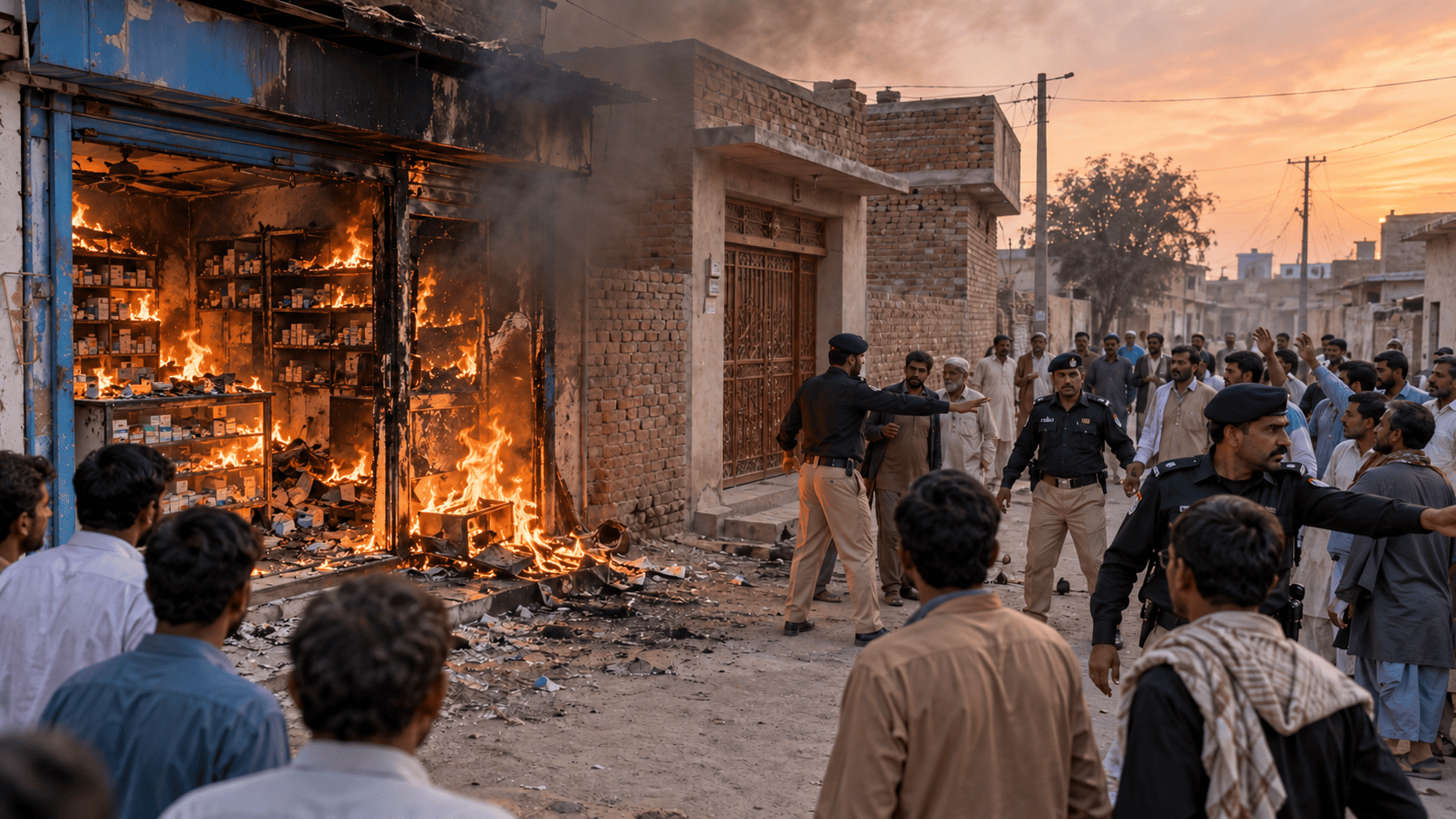
The Supreme Court’s decision triggered large protests across Pakistan. Hardline religious groups blocked roads and demanded that the acquittal be reversed. Amnesty reported that threats were made not only against Asia Bibi but also against senior state figures, including the chief justice and government leadership.
For several days, major roads and cities were disrupted. Asia Bibi remained under intense security pressure despite having been acquitted. This demonstrated a difficult reality: A person can win in court and still remain unsafe outside it.
A Review Petition Was Filed
Following the protests, a review petition was filed asking the Supreme Court to reconsider the acquittal. On 29 January 2019, the Supreme Court dismissed that petition and upheld Asia Bibi’s acquittal. At that point, her legal acquittal was effectively final.
She Eventually Left Pakistan
Despite the acquittal, Asia Bibi remained in Pakistan for several months because of continuing security concerns. In May 2019, Pakistan’s Foreign Office confirmed that she had left the country and arrived safely in Canada, where she was reunited with her family. Her legal case had ended. But the security consequences continued long after the court had declared her free.
Nearly a Decade Defined by One Accusation
- Asia Bibi was accused in 2009.
- She was sentenced to death in 2010.
- The Supreme Court acquitted her in 2018.
- The review petition was rejected in 2019.
- She left Pakistan later that year.
An argument lasting minutes had shaped almost a decade of her life. That is why due process must begin before years of imprisonment—not only at the final appeal.
What the Case Says About Evidence
The Asia Bibi case is often discussed politically or religiously. But at its legal core, the issue was evidence.
The Supreme Court found enough doubt and inconsistency to overturn a death sentence. That demonstrates a principle applicable to every criminal case: The more serious the punishment, the more carefully the evidence must be tested. When the possible consequence is death, the standard cannot be rumor, social pressure or assumption.
Religious Sensitivity and Due Process Can Coexist
Respect for Islam and support for due process are not mutually exclusive. Pakistan’s Supreme Court itself demonstrated that principle. Religious allegations can be taken seriously while still requiring: evidence, credible witnesses, fair procedure, and judicial review. A justice system protects religion best when it also protects the integrity of law.
The Danger of Social Punishment Before Legal Judgment
Asia Bibi’s case also demonstrates that punishment can begin long before a final court ruling. A blasphemy accused may face social isolation, loss of employment, threats, displacement of family, violence, or years of detention.
Even acquittal cannot always reverse those consequences. That is why responsible institutions must protect accused persons from both wrongful conviction and extrajudicial retaliation.
The Universal Declaration of Human Rights
Asia Bibi’s case directly touches several principles contained in the Universal Declaration of Human Rights. These include:
- equality before the law;
- freedom of thought, conscience and religion;
- protection from arbitrary detention;
- the right to a fair hearing;
- and the presumption of innocence.
Her case also illustrates why judicial independence matters. Without an effective appeal, the original death sentence would have remained.
Minority Rights Are Pakistani Rights
Asia Bibi was not asking for a different legal system because she was Christian. She was asking for the same thing every Pakistani accused of a crime should receive: a fair examination of evidence.
At Samaritan’s Fellowship Foundation, we believe minority rights are not a separate category of foreign rights. They are part of equal Pakistani citizenship. Our Human Rights & Empowerment work seeks to advance rights awareness, peaceful participation, community resilience and local leadership.
Why Economic Vulnerability Also Matters
Asia Bibi was a farm worker. That detail matters. Marginalized laborers often have limited access to legal resources, political influence, secure employment, safe housing, and powerful social networks. That can make any legal crisis more difficult.
This is why SFFP’s model connects rights with economic empowerment. Through StartFish, marginalized families build sustainable livelihoods and greater independence. Through Set Them Free, families trapped in bonded labour and exploitation pursue pathways toward freedom and reintegration. And through How We Work, rights, livelihoods, development and leadership become part of one ecosystem. Because economic independence can strengthen a family’s ability to withstand crisis.
What Should We Learn From Asia Bibi?
Several lessons stand out.
- A workplace dispute should not bypass evidence.
- Religious allegations require careful investigation.
- Lower-court judgments must remain open to meaningful appeal.
- Judges must be free to decide without intimidation.
- Acquitted people must be protected afterward.
- And public disagreement must never become permission for threats or vigilantism.
Asia Bibi eventually received justice through Pakistan’s Supreme Court. But it took nearly a decade.
Help Us Advance Freedom, Dignity and Opportunity
Samaritan’s Fellowship Foundation builds integrated, community-led ecosystems that empower marginalized communities through human rights, healthcare, education, clean water, sustainable livelihoods and local leadership.
We believe rights should not exist only in legal documents. They should protect people in everyday life.
If you believe every citizen deserves a fair trial, protection from violence and the opportunity to live with dignity regardless of religion:
Together, we can help communities move from vulnerability to resilience and from exclusion to opportunity. Empowerment Beyond Aid — Advancing Freedom and Rights.
Editorial Note
Samaritan’s Fellowship Foundation documents publicly reported human-rights cases for education, historical record and awareness.
Asia Bibi is described as accused of blasphemy because the Supreme Court of Pakistan overturned her conviction and acquitted her on 31 October 2018. The Court dismissed the subsequent review petition on 29 January 2019.
This article does not attribute the actions or statements of individual accusers, protesters, political actors or extremist groups to an entire religion, community or the people of Pakistan.
SFFP supports peaceful coexistence, constitutional protections, judicial independence, due process and equal human dignity for every citizen.
References
- Supreme Court of Pakistan — Mst. Asia Bibi v. The State, Criminal Appeal No. 39-L of 2015
Primary legal judgment in which the Supreme Court overturned the conviction and acquitted Asia Bibi on 31 October 2018. https://www.supremecourt.gov.pk/downloads_judgements/Crl.A._39_L_2015.pdf
- Amnesty International — Pakistan: Asia Bibi Death Sentence Overturned in Important Victory for Religious Tolerance, 31 October 2018 Amnesty’s immediate response to the Supreme Court acquittal. https://www.amnesty.org.uk/knowledge-hub/all-resources/pakistan-asia-bibi-death-sentence-overturned-important-victory-religious-tolerance
- Amnesty International — Government of Pakistan Must Repeal Its Blasphemy Laws, May 2019 Summarizes Bibi’s 2010 death sentence, October 2018 acquittal, January 2019 review decision and eventual release. https://www.amnesty.org/en/latest/press-release/2019/05/pakistan-government-of-pakistan-must-repeal-its-blasphemy-laws
- Amnesty International — Asia Bibi Leaves Pakistan for Canada a Free Woman, 14 May 2019 Confirms that Pakistan’s Supreme Court upheld the acquittal and that Bibi later left Pakistan and arrived in Canada. https://www.amnesty.org/en/documents/asa33/0345/2019/en
- Amnesty International — Asia Bibi Must Finally Get Her Freedom, 29 January 2019 Published when the Supreme Court rejected the review petition against her acquittal. https://www.amnesty.org/en/latest/news/2019/01/pakistan-asia-bibi-must-finally-get-her-freedom
- Amnesty International — Pakistan’s Anti-Blasphemy Movement and Protests After the Acquittal Documents nationwide protests, threats and pressure following the Supreme Court verdict. https://www.amnesty.org/en/latest/news/2018/11/pakistans-anti-blasphemy-movement-is-showing-once-again-that-real-power-lies-in-the-streets
- Amnesty International Urgent Action — Christian Woman Accused of Blasphemy at Risk: Aasia Bibi Case summary documenting her conviction, death sentence and security concerns. https://www.amnesty.org/ar/wp-content/uploads/2021/05/ASA3393732018ENGLISH.pdf
- LUMS — A Critical Review of Asia Bibi Case Academic legal analysis of the Supreme Court judgment and evidentiary principles applied in the case. https://sahsol.lums.edu.pk/sites/default/files/2022-09/9._a_critical_review_of_asia_bibi_case_0.pdf
- Commonwealth Lawyers Association — Statement on the Case of Asia Bibi Legal-profession statement noting the Supreme Court’s decision to quash the death sentence and acquit her. https://commonwealthlawyers.com/wp-content/uploads/2018/12/ASIA-BIBI-CLA-Statement-BS-2-1-1511182.pdf
- Wikipedia — Asia Bibi Blasphemy Case Dedicated case page covering the 2009 accusation, trial, appeals, Supreme Court acquittal, protests and departure from Pakistan. https://en.wikipedia.org/wiki/Asia_Bibi_blasphemy_case