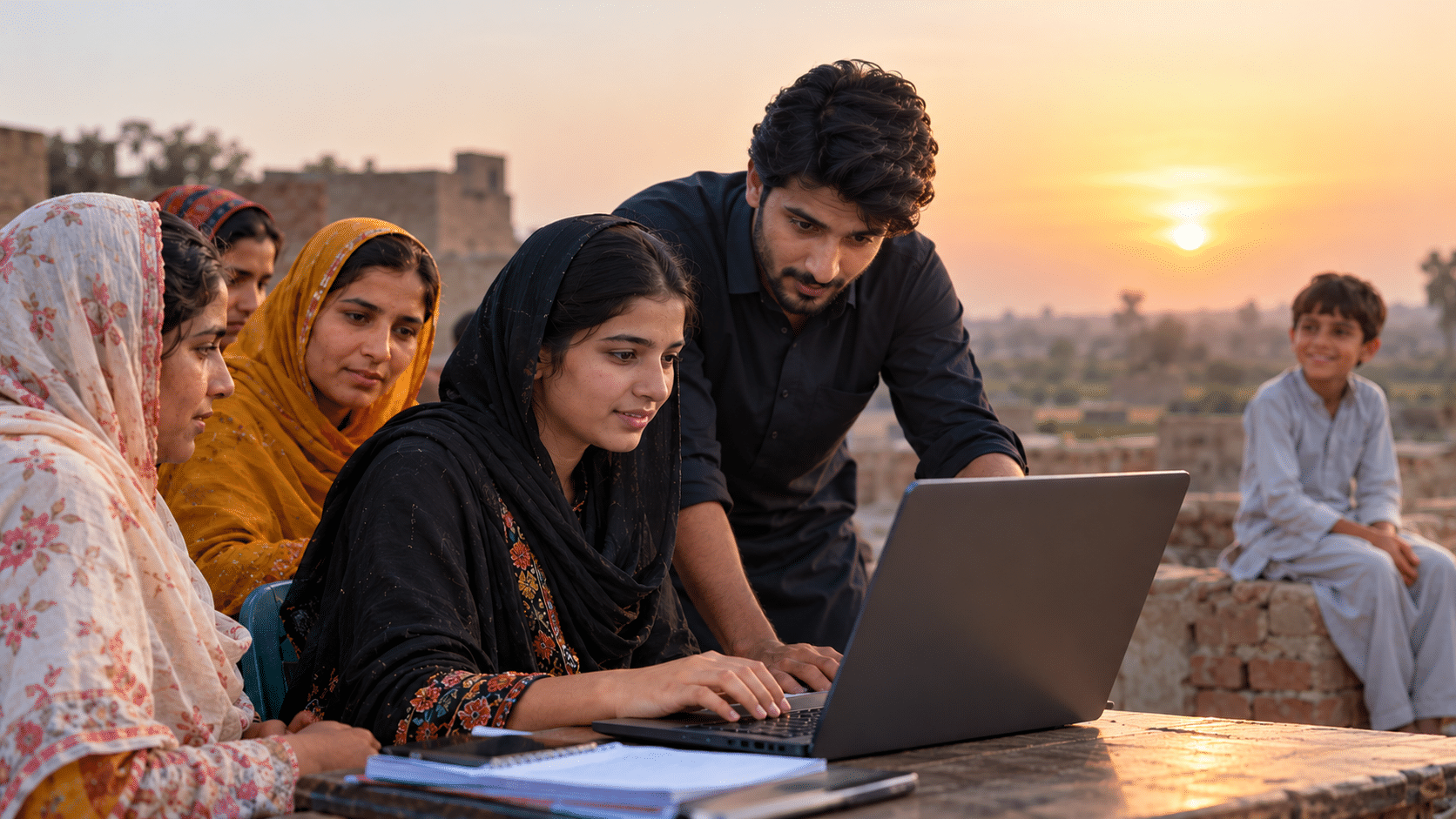
Samaritan’s Fellowship Foundation Pakistan works with marginalized and minority communities to defend their rights, strengthen their voice, and create opportunities for lasting self-reliance.
Our work connects three pillars: Freedom, Rights & Empowerment; Economic Opportunity; and Peace & Fellowship.
We speak for the freedom of people from social differences, injustice, modern slavery, extremism, religious intolerance, persecution, and poverty.
Iqbal Masih: The Child Who Spoke Out Against Bonded Labour
April 14, 1995
Iqbal Masih: The Child Who Spoke Out Against Bonded Labour
Iqbal Masih was a Pakistani child whose experience of bonded labour became the foundation of an extraordinary campaign for other children’s freedom. After spending part of his childhood weaving carpets under coercive conditions, he escaped that life and began speaking publicly about what children in similar circumstances endured. The United States Department of Labor remembers him as a child who entered exploitation at approximately four and escaped at around ten. U.S. Department of Labor
He could have been remembered only for what had happened to him. Instead, he became known for what he did with the opportunity to speak.
Iqbal challenged the idea that a child’s labour could belong to someone else. He brought a young survivor’s voice into discussions often conducted by adults, and he helped the world see the children behind an industry’s finished products.
On 16 April 1995, he was killed in Pakistan. His life was brief, but his contribution continues to be recognized internationally. World’s Children’s Prize
For Samaritan’s Fellowship Foundation Pakistan, Iqbal is a champion of human dignity whose story deserves to be told with both affection and accuracy.
A Childhood Spent at a Carpet Loom
Iqbal’s early life was shaped by bonded labour in Pakistan’s carpet industry. Accounts of his childhood describe work imposed at an age when he should have been learning, playing and growing within a safe environment.
A remembrance published by the Child Labor Coalition, written by an advocate who knew him, describes approximately six years at a carpet loom before the Bonded Labour Liberation Front helped him leave at around ten. Child Labor Coalition
A carpet can be admired for its pattern, texture and craftsmanship while the circumstances of the person who made it remain unseen. Iqbal’s story asks us to look beyond the finished object.
For a child, the cost of coercive work is measured in more than wages. It includes time away from education, dependence on adults who control the workplace, and the loss of ordinary opportunities to explore the world.
No child should have to earn the right to leave an abusive situation. No household debt can justify treating a child as someone else’s property.
Understanding the System He Challenged
Bonded labour involves more than having a loan or accepting an advance on wages.
The International Labour Organization explains that debt bondage can occur when workers, sometimes together with their families, are forced to work to repay their own or inherited debts. Payment of wages does not, by itself, prove that work is freely chosen. The ability to refuse or leave matters. ILO — Business and Forced Labour
Anti-Slavery International describes how unclear charges, deductions and lack of control over a debt can keep people working without a realistic end to the obligation. Threats and fear of passing the debt to children can deepen that dependence. Anti-Slavery International
These explanations help clarify the injustice Iqbal spoke against. A family’s financial difficulty must never become permission to control its children.
The response must address coercion, access to protection and the conditions that leave families with few alternatives.
Finding Support and a Different Future
The Bonded Labour Liberation Front, associated with campaigner Ehsan Ullah Khan, played an important role in Iqbal’s journey out of exploitation and into advocacy. His story belongs within that wider movement of workers, survivors and supporters. Child Labor Coalition
Recognizing that support does not diminish his courage. It explains why support matters.
A child who has experienced exploitation needs adults who can help create safety, open access to learning and make it possible to imagine a different future. Iqbal’s voice became stronger when people listened and helped him reach others.
The lesson for organizations working today is practical: identifying a child in danger is only the beginning. Protection needs to be followed by education, stability and continued care.
Freedom should allow a child to become more than a survivor.
A Young Voice Reaching the World
Iqbal travelled abroad to speak about child labour, including visits to Sweden and the United States in 1994. Accounts of those visits describe a child carrying his experience into rooms far removed from the carpet workshops where he had worked. EBSCO — Iqbal Masih
In 1994, he received a Reebok Human Rights Award. The U.S. Department of Labor includes that recognition in its account of his life. U.S. Department of Labor — Iqbal Masih Award
His presence made exploitation harder to discuss as an abstract problem. He could speak from experience about the difference between being controlled and having choices.
World’s Children’s Prize remembers him for giving other children the courage to leave their employers. World’s Children’s Prize
That influence is central to his legacy. He used a freedom newly available to him to draw attention to children who still lacked it.
He Was Also a Child with His Own Dreams
Public recognition can make a young person appear older than he was. Iqbal’s life should also be remembered through its ordinary hopes.
An advocate’s recollection of meeting him after his American visit describes his excitement about flying, a camera and meeting schoolchildren in Boston. It also recalls the possibility of future university study. Child Labor Coalition
A biographical account records his ambition to become a lawyer and continue working against child exploitation. EBSCO — Iqbal Masih
These details matter because Iqbal had a future of his own to live. Alongside his public courage were opportunities to study, make friends, develop interests and grow into adulthood.
Honouring him should include remembering those possibilities. He deserved years in which the demands placed on him were no greater than those placed on any other child.
His Killing on 16 April 1995
Iqbal was shot and killed near Muridke on 16 April 1995. He is widely remembered as approximately 12 at the time, although some institutional accounts give his age as 13. EBSCO — Iqbal Masih, U.S. Department of Labor
Accounts of the motive differed. Campaigners linked the killing to threats arising from his activism, while other accounts described a confrontation involving a farm worker. The claim that carpet-industry interests ordered his death should therefore not be presented as an established judicial finding. EBSCO — Iqbal Masih
On 19 April 1995, Amnesty International called for an impartial inquiry into his killing. Amnesty International
This article does not claim to resolve those competing accounts or establish a final criminal responsibility. Remembering Iqbal accurately requires preserving that distinction.
The documented importance of his life does not depend on simplifying the circumstances of his death. His courage, advocacy and influence stand in their own right.
Recognition That Continued After His Death
In 2000, Iqbal received the first World’s Children’s Prize for the Rights of the Child posthumously. World’s Children’s Prize
The United States Department of Labor also honours his name through the Iqbal Masih Award for the Elimination of Child Labor, recognizing exceptional efforts against the worst forms of child labour. U.S. Department of Labor — Iqbal Masih Award
His name reached another international stage in December 2014. In his Nobel Lecture, Kailash Satyarthi remembered Iqbal among those who had sacrificed their lives for children’s freedom and dignity. Nobel Prize — Kailash Satyarthi’s Lecture
These recognitions connect his brief life to a continuing movement. They also place a responsibility on those who celebrate him: recognition should lead to practical protection for children facing exploitation now.
A Timeline of Iqbal’s Life and Legacy
Period
Milestone
Early childhood
Entered bonded labour in carpet weaving, commonly reported at approximately four years old.
Around age ten
Left exploitation with support from the Bonded Labour Liberation Front.
1994
Took his advocacy abroad and received a Reebok Human Rights Award.
16 April 1995
Was shot and killed near Muridke, Pakistan.
19 April 1995
Amnesty International called for an impartial inquiry.
2000
Received the World’s Children’s Prize posthumously.
2014
Was remembered in Kailash Satyarthi’s Nobel Lecture.
Ages and some biographical details vary across sources. This account avoids presenting uncertain details with false precision.
What It Means to Call Him a Champion
Samaritan’s Fellowship remembers Iqbal as a champion because he used his experience to speak for others.
His example challenges the assumption that leadership belongs only to people with wealth, status or formal authority. A young person who had been denied choices helped others recognize that those choices were theirs by right.
At the same time, children should never have to become extraordinary campaigners to receive ordinary protection. Adults and institutions carry the responsibility to make childhood safe.
Admiration for Iqbal should strengthen that responsibility. We should listen to children before they become famous, act on their concerns before a crisis and protect their opportunity to grow without requiring them to prove exceptional courage.
Why His Story Matters to Samaritan’s Fellowship
Iqbal’s story speaks directly to SFFP’s commitment to dignity, protection and opportunity.
Through Set Them Free, Samaritan’s Fellowship addresses the circumstances of families affected by bonded labour and exploitation. Our wider approach connects protection with the practical support people need to build a more secure future.
That pathway includes access to education, healthcare, livelihood opportunities and knowledge of rights. Each part addresses a different reason why a family may remain vulnerable or struggle after leaving an exploitative situation.
Our StartFish initiative focuses on helping families develop income through skills and small enterprise. Stronger adult livelihoods can contribute to conditions in which children remain in education and families have greater freedom to make decisions.
These are SFFP’s present commitments. We do not claim to have participated in Iqbal’s rescue, represented him or worked with him during his lifetime. We honour his contribution by explaining how the principles he defended relate to our work today.
Keeping Protection at the Centre
SFFP believes that an effective response to exploitation should include:
Lawful protection: access to appropriate authorities, legal assistance and safe responses to coercion.
Education: practical support for children to enter or return to learning.
Family stability: attention to housing, healthcare and essential needs.
Adult livelihoods: realistic opportunities to earn without dependence on a child’s labour.
Community participation: helping people understand their rights and take part in decisions affecting them.
Support should be shaped with the people concerned. Families need a meaningful voice in their future, and children need opportunities to express their concerns safely.
The aim is sustained safety and choice—not simply a change of location or a brief moment of relief.
Learn, Share and Support
Iqbal’s story can help schools, churches, community groups and workplaces discuss the relationship between childhood, labour and human dignity.
Your contribution can support SFFP’s wider work with vulnerable families through our donation page or Every.org. These links support our broader programs; this is not a fundraiser for Iqbal’s family or an affiliated memorial organization.
We remember a child who spoke with courage. We honour him when another child can learn, live safely and look ahead to adulthood with choices of their own.
Frequently Asked Questions
Who was Iqbal Masih?
Iqbal Masih was a Pakistani survivor of bonded child labour who became an internationally recognized advocate against child exploitation.
What kind of work did he do?
He worked in carpet weaving during childhood. His case concerns bonded labour in that industry, rather than domestic service.
How old was he when he died?
He is widely remembered as approximately 12, although some institutional sources give his age as 13.
Who killed Iqbal Masih?
Published accounts differ concerning the circumstances and motive. This article does not present the allegation of an industry-ordered killing as an established court finding.
Why is his legacy important?
He showed how a survivor’s voice could challenge exploitation and inspire others. Awards and international tributes continue to recognize his contribution.
How can readers honour him?
By supporting child protection, education, responsible employment practices and practical opportunities for vulnerable families—and by listening seriously to children in their own communities.