Ghaziabad, Lahore, Punjab | August 2026
A police station is meant to be a place of protection. It is where citizens report violence, seek emergency assistance and place their trust in the authority of the state.
In August 2026, however, a deeply disturbing allegation emerged from Lahore’s Ghaziabad Police Station. A young woman with an intellectual disability was allegedly brought inside the station by an assistant sub-inspector and sexually assaulted in a room within the premises.
According to publicly reported information, she had not been accompanied by a female police officer. Her presence at the station reportedly raised questions among personnel on duty, yet no effective intervention appears to have prevented the alleged incident.
The woman later returned to her family in distress and disclosed what had allegedly happened.
The accused officer was arrested. A criminal case was registered, the entire staff of the police station was suspended, and senior police officials announced an investigation.
The allegation remains subject to judicial determination. But regardless of the eventual verdict, the circumstances already raise serious questions about disability protection, police supervision, institutional responsibility and the safety of women inside places controlled by law-enforcement authorities.
A Vulnerable Woman Was Allegedly Taken to the Police Station
Media reports described the survivor as a young woman with an intellectual disability.
According to the reported account, an assistant sub-inspector transported her to Ghaziabad Police Station on a motorcycle. Reports stated that personnel stationed at the entrance questioned the officer about why he had brought a woman into the station.
Despite this, she was allegedly taken to a room on the upper floor of the building without a female police officer accompanying her.
This detail is central to the case.
Law-enforcement agencies exercise substantial authority over people who enter their premises. That authority creates a duty to document who has been brought into custody or protective supervision, why they are there, who is responsible for them and whether legally required safeguards are being followed.
That duty becomes even greater when the person concerned is a woman with an intellectual disability.
The Alleged Assault Inside the Station
The woman’s family reportedly said that she disappeared from the street before later returning home in tears and disclosing that she had been sexually assaulted inside the police station.
Public reporting identified the accused as an assistant sub-inspector assigned to Ghaziabad Police Station.
These are allegations that must be tested through evidence and lawful judicial proceedings. The accused remains entitled to the presumption of innocence unless proven guilty by a competent court.
At the same time, the survivor is entitled to dignity, safety, an accessible investigation and protection from intimidation, stigmatization or public exposure.
Respecting the rights of the accused and protecting the rights of the survivor are not contradictory responsibilities. Both are essential parts of the rule of law.
An FIR Was Registered and the Accused Officer Arrested
Following the allegation, Lahore Police arrested the accused officer and initiated a criminal investigation.
Initial reports stated that an FIR was registered under Section 376 of the Pakistan Penal Code, relating to rape, and Section 155-C of the Police Order, 2002, concerning misconduct by police personnel.
Subsequent reports indicated that additional provisions were added to the case, including Section 365-B of the Pakistan Penal Code concerning the abduction of a woman and an aggravated rape provision reportedly applicable where the survivor has a mental or physical disability.
The inclusion or modification of legal provisions does not itself establish guilt. It defines the allegations and legal questions that investigators and the court are required to examine.
The strength of the case will ultimately depend on admissible evidence, including medical and forensic findings, witness statements, official station records and the integrity of the investigation.
The Entire Police-Station Staff Was Suspended
Lahore Police reportedly suspended all 78 officers and personnel deployed at Ghaziabad Police Station.
This was an unusually broad departmental action.
Lahore’s Deputy Inspector General of Police reportedly explained that every person serving at the station had a responsibility to prevent and report wrongdoing within the premises. Questions were also raised about why the woman was brought into the station without the presence of female police personnel.
The suspension demonstrated that the authorities recognized possible failures extending beyond the conduct of one accused officer.
However, suspension is an administrative measure. It may prevent interference, preserve institutional discipline and allow an inquiry to proceed—but it is not a finding of criminal guilt, nor can it replace an impartial criminal investigation.
The central questions remain:
- Who saw the woman enter the station?
- Was her arrival recorded in the station register?
- Why was she brought there?
- Who authorized or permitted her movement inside the building?
- Were the station’s CCTV cameras operating?
- Which officers were present at the relevant time?
- Why was a female officer not called?
- Did any official hear, witness or suspect wrongdoing?
- Did anyone attempt to intervene or report the situation?
- Were records, footage and other evidence immediately preserved?
A transparent investigation must examine both the principal allegation and the wider institutional environment in which the alleged incident could have occurred.
The Court Extended the Accused Officer’s Remand
On 9 August 2026, Dawn reported that a judicial magistrate extended the physical remand of the accused assistant sub-inspector for four additional days.
Police requested further custody to complete the investigation.
Further reporting on 12 August stated that investigators had obtained another period of physical remand and that serious additional provisions had been incorporated into the case.
Judicial remand proceedings are part of the investigation and do not determine guilt. Their importance lies in allowing investigators to lawfully collect and examine evidence while the accused remains subject to court oversight.
Medical and Forensic Procedures Were Conducted
By 25 August 2026, police stated that the survivor’s initial medico-legal examination and required medical tests had been completed.
The accused officer had reportedly undergone a potency test, while other forensic and investigative procedures were also being pursued.
Authorities said that the investigation would be conducted on merit.
Medical examinations in sexual-violence cases must be performed with dignity, informed consent and sensitivity to trauma. In cases involving an intellectual disability, communication and consent procedures must be adapted to the survivor’s needs.
Forensic evidence is important, but an investigation should never depend on medical evidence alone. Witness accounts, CCTV recordings, location data, station registers, duty rosters, communications and evidence concerning the conduct of other personnel may also be relevant.
At the time of writing, no final judicial determination in the case had been publicly reported.
More Than an Individual Allegation
This case is not only about the alleged conduct of one police officer. It raises wider concerns about institutional safeguards, supervision and accountability within places where citizens should be able to seek protection.
A police station represents the authority of the state. Every person entering it—whether as a complainant, witness, suspect or vulnerable individual—remains entitled to dignity, safety and protection under the law.
The circumstances reported in this case raise several serious questions:
- Why was a vulnerable woman brought to the police station without a female police officer?
- Was her arrival and movement properly recorded?
- Were mandatory procedures for handling women and persons with disabilities followed?
- Why did other personnel reportedly fail to intervene or report the situation?
- What independent safeguards exist when misconduct is alleged against a police officer?
- Will suspension be followed by a transparent investigation and, if supported by evidence, prosecution?
Suspension can protect an investigation from interference, but it is an administrative measure—not a substitute for criminal accountability.
Intellectual Disability Must Increase Protection—not Reduce Credibility
Women and girls with intellectual, developmental or psychosocial disabilities may face an increased risk of sexual violence and exploitation.
They may also encounter additional barriers when attempting to report abuse.
A survivor may communicate differently, require more time to answer questions or need assistance understanding legal and medical procedures. None of these circumstances diminishes her dignity or automatically makes her testimony unreliable.
The state must ensure appropriate accommodations, including:
- Assistance from a trained support person
- Accessible and understandable communication
- Trauma-informed interviewing
- Qualified legal representation
- Sensitive medico-legal examination
- Protection from repeated and unnecessary questioning
- Confidentiality of medical and personal information
- Psychological and psychosocial support
- Protection from intimidation or pressure
- Regular information for the survivor and her family about the case
Disability should never become a reason for disbelief, neglect or exclusion from justice.
A Police Station Carries a Special Duty of Care
An allegation of sexual violence is grave wherever it occurs. When it allegedly occurs inside a police station, it carries an additional institutional dimension.
Police officers possess powers that ordinary citizens do not. They may stop, question, search, detain or arrest people under conditions established by law.
Because of these powers, police personnel carry a heightened responsibility to protect life, dignity and liberty.
A person inside a police station may be separated from family members, unfamiliar with procedures and uncertain about their ability to leave. These conditions can create a serious imbalance of power.
If the person is a woman with an intellectual disability, the imbalance may be even more pronounced.
This is why station registers, CCTV monitoring, female police personnel, supervisory visits and clear custody procedures are not minor administrative requirements. They are safeguards against abuse.
When Those Entrusted With Protection Are Accused
The alleged incident affects more than one survivor and one accused officer. It affects public confidence in the entire justice system.
Women who experience violence are already frequently reluctant to report it because of stigma, fear of retaliation and concern that they will not be believed.
When an alleged offence involves a police officer or occurs inside a police facility, that hesitation can become even stronger.
A survivor may reasonably ask:
- Will the police investigate one of their own fairly?
- Will my private information remain confidential?
- Will officers pressure my family?
- Will the case disappear after public attention ends?
- Will suspension be followed by prosecution?
- Will I be blamed for reporting what happened?
These questions cannot be answered through public statements alone. Trust must be earned through transparent procedure, independent scrutiny and consistent accountability.
Suspension Must Not Replace Criminal Accountability
Suspending police personnel may be necessary to protect an investigation and maintain departmental discipline.
But suspension alone is not justice.
If credible evidence establishes that a criminal offence occurred, the responsible person must face prosecution before a competent court. If evidence establishes that other personnel knowingly facilitated, concealed or failed to report misconduct, their responsibility must also be examined according to law.
Conversely, no officer should be punished merely because of public anger or association with the police station. Individual responsibility must be established through evidence.
This balance is essential.
Accountability is not collective revenge. It is the fair determination of responsibility through lawful and independent process.
Equality Before the Law Includes State Officials
The principle of equality before the law has little meaning if government officials receive greater protection than ordinary citizens.
A police uniform cannot become immunity from investigation. Nor should an allegation against a police officer automatically become proof of guilt.
The same legal standard must apply to everyone:
- Allegations must be registered and investigated.
- Evidence must be collected without manipulation.
- Survivors and witnesses must be protected.
- Accused persons must receive due process.
- Courts—not departments, crowds or social media—must determine criminal responsibility.
- Convictions must result in penalties prescribed by law.
- Acquittals must be respected where guilt is not proven.
Supporting law enforcement does not require shielding officers from accountability. Responsible accountability strengthens policing by distinguishing officers who uphold the law from individuals who misuse public authority.
Accountability Must Be Equal
Police officers perform a difficult and essential public duty, and the actions of one accused individual should not be used to condemn an entire institution. However, public authority carries a higher—not lower—responsibility to obey the law.
When an allegation involves a police officer, the investigation must be independent, impartial and protected from institutional influence. Police personnel accused of criminal conduct must be subject to the same law and judicial process as every other citizen.
Departmental solidarity must never become institutional protection for wrongdoing.
Equal justice means that an ordinary citizen and a government official are investigated according to the same legal standards. It also means that neither media pressure nor official influence should determine guilt, innocence or punishment.
The Relevant Human Rights
The principles raised by this case are reflected in Pakistan’s constitutional framework and the Universal Declaration of Human Rights.
They include:
- The right to life, liberty and personal security
- The right to human dignity
- Equality before the law
- Equal protection without discrimination
- Freedom from cruel, inhuman or degrading treatment
- The right to an effective legal remedy
- The right to privacy
- The presumption of innocence
- The right to a fair and public hearing
- Recognition and protection of persons with disabilities
These rights apply inside a police station just as they apply everywhere else.
They protect survivors. They protect witnesses. They protect accused persons. And they place limits on the exercise of state power.
Human rights are not privileges reserved for popular people or powerful institutions. They belong equally to every person.
What Authorities Should Do
Samaritan’s Fellowship Foundation Pakistan calls upon the relevant authorities to:
- Ensure an independent, impartial and evidence-based investigation.
- Protect the survivor and her family from intimidation or retaliation.
- Provide accessible legal, medical and psychosocial assistance.
- Preserve CCTV footage, duty registers, entry records, communications and forensic evidence.
- Investigate both the principal allegation and any institutional failure to prevent or report misconduct.
- Prosecute every person against whom sufficient admissible evidence is established.
- Publish an appropriate public update on the investigation without revealing the survivor’s identity.
- Review safeguards for women and persons with disabilities at every police station.
- Ensure that suspension is not treated as a replacement for criminal accountability.
- Introduce effective independent oversight for complaints involving police personnel.
What Must Change Inside Police Stations?
This case highlights the need for stronger safeguards across Pakistan.
Authorities should consider:
- Ensuring that no woman is detained, questioned or held at a police station without the presence of trained female personnel, except during a genuine emergency and with documented reasons.
- Recording every person brought to a station, including the time, reason, responsible officer and time of departure.
- Installing functional CCTV cameras in entrances, corridors and other lawful monitoring areas, with secure and tamper-resistant storage.
- Conducting independent audits of station registers, custody records and CCTV systems.
- Providing disability-awareness and safeguarding training to police personnel.
- Establishing confidential complaint mechanisms outside the local chain of command.
- Ensuring immediate access to legal representation and trusted family or support persons.
- Protecting complainants and witnesses from retaliation.
- Requiring independent investigation whenever sexual violence or serious misconduct is alleged against a police officer.
- Publishing appropriate updates on investigations while protecting survivor confidentiality.
- Ensuring that departmental suspension does not replace criminal proceedings.
- Introducing body-worn cameras and auditable evidence-preservation procedures where operationally appropriate.
Reform should prevent the next violation—not merely respond after harm has occurred.
This Case Should Not Be Used to Condemn Every Police Officer
The allegation against one officer should not be used to blame every member of the police service.
Across Pakistan, many police officers work under difficult conditions, face significant personal risks and continue to protect citizens with professionalism and integrity.
Samaritan’s Fellowship Foundation Pakistan does not oppose law-enforcement institutions. We support institutions that act according to the Constitution, protect citizens and remain accountable to law.
Our concern is with abuse of authority, institutional silence and unequal justice—not with creating hostility toward the police.
The appropriate response to alleged misconduct is neither denial nor generalized condemnation. It is an independent investigation, protection for the survivor, due process for the accused and reform of any institutional weakness revealed by the evidence.
Samaritan’s Fellowship Stands for Equal Protection
At Samaritan’s Fellowship Foundation Pakistan, we believe that every person deserves freedom, dignity, safety and equal protection under the law.
Our human-rights work is guided by a simple principle:
Human Rights Belong to Everyone.
This includes women, children, persons with disabilities, religious minorities, people living in poverty, workers, prisoners, complainants, witnesses and accused persons awaiting trial.
Protecting the survivor does not require abandoning due process. Defending due process does not require ignoring the survivor.
A just society must be capable of doing both.
Through our Human Rights & Empowerment work, SFFP promotes rights awareness, constitutional understanding, peaceful civic participation, responsible advocacy and institutional accountability.
We document publicly reported cases because silence allows abuse to be forgotten. Documentation preserves memory, helps communities understand their rights and enables civil society to advocate for reform based on evidence.
How Samaritan’s Fellowship Supports Vulnerable People
Human-rights vulnerability rarely exists in isolation.
A woman facing violence may also be living with a disability, financial dependence, limited education, social isolation or little knowledge of the justice system. Her family may struggle to access lawyers, medical care, safe accommodation or psychosocial support.
That is why Samaritan’s Fellowship works through an integrated community-support ecosystem.
Depending on verified needs, available resources and appropriate partnerships, our approach may include:
- Listening to survivors and families with dignity and confidentiality
- Helping vulnerable people understand available reporting and referral pathways
- Connecting families with qualified legal, medical or psychosocial professionals
- Supporting responsible documentation and evidence-based advocacy
- Raising awareness of constitutional and human rights
- Promoting disability inclusion and protection
- Connecting economic vulnerability with skills and livelihood opportunities
- Engaging communities in peaceful participation and institutional accountability
- Following cases where appropriate and advocating against intimidation or discrimination
Our role is not to replace the police, courts, lawyers, doctors or government institutions. Our role is to help vulnerable communities understand and access lawful systems while advocating for those systems to work fairly.
SFFP has not claimed direct representation of the survivor in this reported case. Any future assistance would depend on contact, consent, verification, safeguarding considerations and available professional partnerships.
Our broader How We Work approach connects immediate protection and referral with education, healthcare, sustainable livelihoods, rights awareness and community leadership.
People are more capable of defending their rights when they are informed, economically secure, socially connected and able to participate in decisions affecting their lives.
What Should We Learn From the Ghaziabad Case?
This case leaves several important lessons:
- A police station must remain a place of protection for every citizen.
- Women with disabilities require additional safeguards and accessible justice.
- No woman should be taken into a police facility without proper documentation and supervision.
- Police personnel must report suspected wrongdoing, including misconduct by colleagues.
- Suspension is an interim administrative action—not a substitute for prosecution.
- Investigations involving police personnel require meaningful independence.
- Survivors’ identities, medical information and dignity must remain protected.
- Public officials must be subject to the same criminal law as ordinary citizens.
- Accused persons must receive a fair trial and remain presumed innocent until proven guilty.
- Institutional reform must continue after media attention has ended.
The credibility of the justice system will be determined not only by what authorities announced after this allegation, but by whether the investigation remains independent, the survivor remains protected and the case reaches a lawful and transparent conclusion.
Protection Must Apply to Everyone
Samaritan’s Fellowship Foundation Pakistan supports lawful policing and recognizes the service of officers who protect communities with integrity. Institutional accountability strengthens responsible police officers and increases public trust.
Our position is not against the police. It is against abuse, impunity and unequal application of the law.
A police station must be a place where vulnerable people find protection—not a place they fear entering.
Human rights belong to everyone. No person should be denied dignity, safety or justice because of gender, disability, social position or the authority of the person accused.
Help Us Advance Freedom, Dignity and Opportunity
Samaritan’s Fellowship Foundation Pakistan works to build integrated, community-led ecosystems that empower marginalized communities through human rights, education, healthcare, clean water, sustainable livelihoods and local leadership.
We believe genuine protection requires more than responding after violence has already occurred. It requires accountable institutions, informed citizens, resilient families, accessible justice and communities capable of peacefully defending their rights.
Your support helps us document human-rights concerns, educate communities, connect vulnerable families with appropriate services, promote peaceful advocacy and strengthen pathways from immediate protection to long-term empowerment.
If you believe that every woman deserves safety, every person with a disability deserves equal protection and every public official must remain accountable under law:
Together, we can help build communities that are safer, stronger, informed and able to participate in the institutions affecting their lives.
Empowerment Beyond Aid — Advancing Freedom and Rights.
Editorial Note
Samaritan’s Fellowship Foundation Pakistan documents publicly reported human-rights cases for historical record, education, public awareness and evidence-based advocacy.
The sexual assault, abduction and misconduct claims discussed in this article remain allegations unless and until established through a competent judicial process. The accused is entitled to the presumption of innocence, due process and a fair trial.
The identity of the survivor has not been published. References to her age and disability are limited to details necessary for understanding the human-rights and safeguarding dimensions of the case. Some reports described her age differently; for this reason, SFFP refers to her as a young adult woman.
SFFP does not attribute the alleged actions of an individual officer or the possible failures of particular personnel to the entire police service or the people of Pakistan. We support lawful policing, peaceful civic engagement, constitutional protections, institutional accountability and equal human dignity for all.
References
- The Guardian, Pakistan Precinct Suspends All 78 Officers and Staff Over Alleged Rape at Police Station, 5 August 2026. The report documents the principal allegation, arrest of the accused officer, suspension of station personnel and statements concerning collective responsibility.
Read the report
- Dawn, Physical Remand of ASI Extended in Rape Case, 9 August 2026. The report records the judicial extension of the accused officer’s physical remand.
Read the report
- Gulf Today, Mentally Challenged Woman Raped Inside Police Station in Lahore; Entire Staff Suspended, 5 August 2026. The report discusses the FIR, alleged police misconduct and departmental action.
Read the report
- Aaj News, Serious Provisions Added to Case Against ASI, 11 August 2026. The report states that kidnapping and aggravated rape provisions were added to the case.
Read the report
- ARY News Urdu, Further Remand Obtained in Ghaziabad Police Station Case, 12 August 2026. The report discusses the remand and alleged violations of procedures for bringing the woman into the station.
Read the report
- Associated Press of Pakistan report reproduced by UrduPoint, Ghaziabad Rape Case: Police Arrest Accused, Complete Key Procedures, 25 August 2026. The report records medico-legal, medical and forensic developments announced by police.
Read the report
- Excerpt: A young woman with an intellectual disability was allegedly sexually assaulted inside Lahore’s Ghaziabad Police Station. The case raises urgent questions about police accountability, disability safeguards and equal protection under the law.
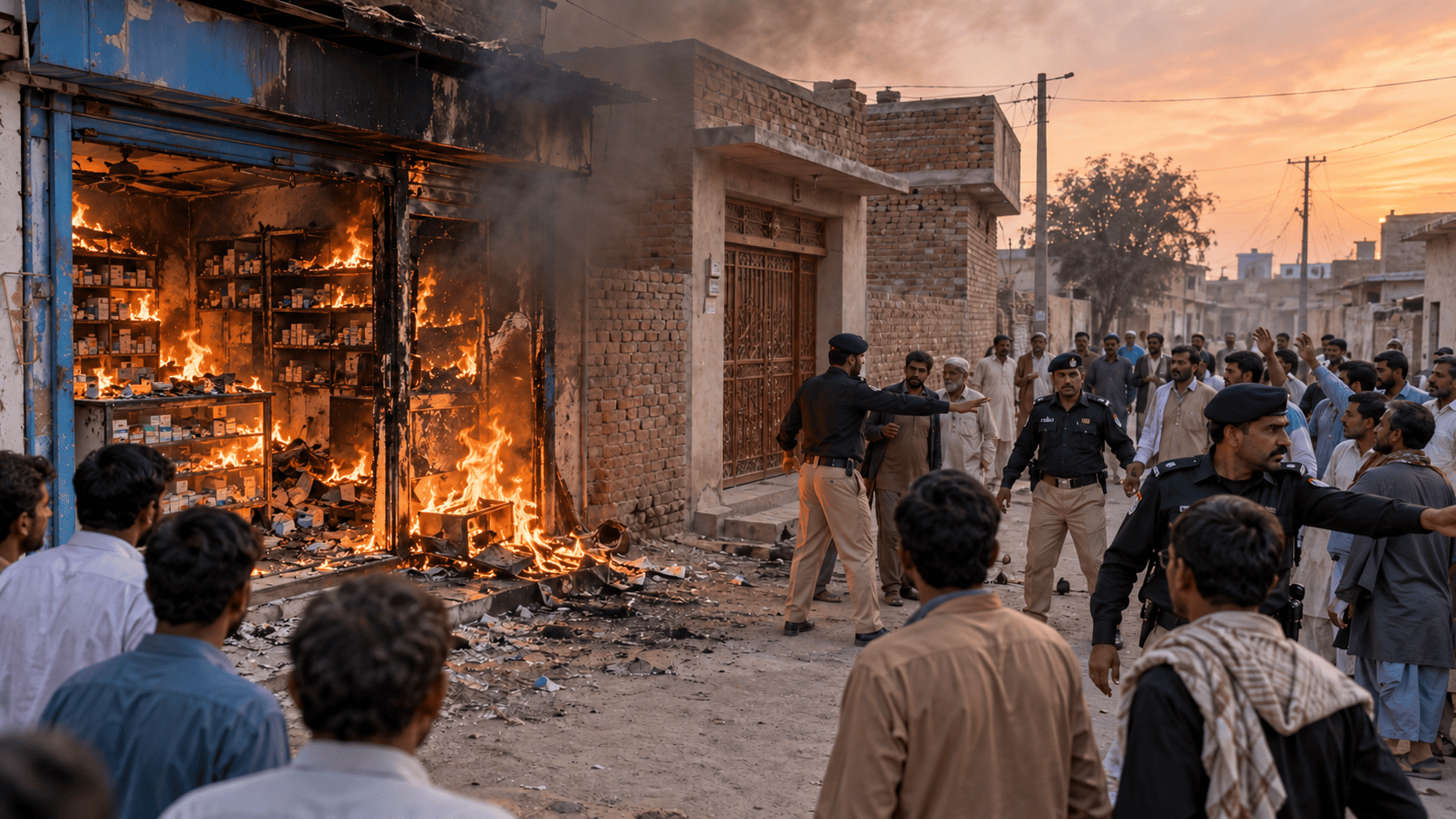
- Featured Image: Image used for illustration. It does not depict the survivor, accused officer or actual Ghaziabad Police Station.